Posts tonen met het label gay. Alle posts tonen

maandag 22 november 2010

Philippe, Duc d'Orleans


The next gay icon is also a royal and lived about 200 years before the eventful Ludwig II. His name was Philippe de France (21 September 1640 – 9 June 1701) and he was the only brother of the famous French Sun King, Louis XIV. It was a time when kings were untouchable and their conduct was unquestioned. Public opinion was something you threw out on the streets of Paris and eccentricity was a virtue! Not only did Philippe live his life notoriously open as a homosexual, he also became the father of most of the royal houses of Europe, including that of France, Italy and Spain.

Childhood days

It does not often happen in life that your mother encourages your homosexuality from an early age. This is taking the concept of an over compensating mother one step further. Philippe, as mentioned, was the second child of Louis XIII and Anne of Austria. Louis XIII, his father, died when Philippe was still only 3 years old and Anne took over the regency of the under aged Louis XIV.

Anne was the ultimate gay mother. She apparently encouraged the femininity of Philippe. Initially the argument was that this way he posed less of a threat to his elder brother and seemingly later on it amused and delighted! Honestly, from what one can read and see, it was blatantly obvious that Philippe was gay from his effeminate behavior. His father, Louis XIII had had a very tumultuous relationship with his brother, Gaston, Duke of Orleans. So Anne decided to protect the future king, Louis XIV, by making sure that his younger brother, Philippe, had no part in any political or military office. The queen and Mazarin discouraged Philippe from traditional manly pursuits such as arms and politics, and encouraged him to wear dresses, makeup, and indulge in feminine behavior. It is said that Queen Anne called Philippe such nicknames as "my little girl". In court slander he was apparently called the "silliest woman who ever lived".

Deflowering

One of the most bizarre and rather frequently mentioned “joys” of the French court of the time was the deflowering of boys at a seemingly very young age! Philippe was “corrupted with the Italian vice” when he was merely 18. Gay was referred to as the “vice Italian” at the time – apparently the Italians referred to it as the “French vice”!

And who was the lucky man to enjoy the fresh chicken meat? Apparently, Cardinal Mazarin, no one less than the prime minster of Queen Anne’s regency period, arranged for the de-flowering of Philippe at the hands of his own nephew, Philippe Mancini. Philippe was also only 19 at the time and it is quite possible that the two men were attracted to each other and consented to the whole affair. Needless to say, it is a very horny lifetime and both Philippe’s made no secret in later life of their preferences.

Philippe Mancini’s mother was the sister of Cardinal Mazarin. After his father’s early death, Philippe and his 5 gorgeous sisters were shipped off to Paris to make their fortune. They were the “belles” of the French court and managed to sleep their way to the very top. Philippe Mancini was no exception to the rule.

The amazing thing seemingly, is that the deflowering of young boys would become quite a pastime for Philippe and his bad-influence gay cronies in later life!

The fabulous Minette

Philippe was destined to marry the most beautiful woman in court, Henrietta of England, or Minette as she was lovingly called. She lived at court with her mother, who was the widow of the beheaded king of England, Charles I. Both she and her mother were high profile at the French court and her wit and beauty was well recognized and respected at court. She had many avid admirers. She brought with her a great wealth and her brother would be reinstated as Charles II of England!

One thing that stands out about Minette is that she was very, very ambitious. Her first target was none other then Philippe’s brother, Louis XIV. They flirted rather openly at court and there can be no doubt that they had a couple of passionate nights together. The court gossip of the time was that Louis was the father of her first child. Things got so bad that the aged Queen Anne had to resolve the escalating jealousy between her sons. Louis was reprimanded and Philippe and Minette moved to another palace in Paris.


Picture: Philippe with a painting of his favourite daugther Marie Louise, the future Queen of Spain

Soon afterwards in 1662 they, or possibly Louis and Minette, had their first daughter, Marie Louise. She would later become the future Queen of Spain and was Philippe’s favorite daughter – bizarre! Apparently Minette was very disappointed that it was a daughter and threatened to throw the baby in the Seine - giving you a good idea just how limitless the ambition of Minette was.

Her second target was the lover and infatuation at the time of Philippe, Armand de Gramont the Count of Guiche. He was a notoriously handsome playboy which was seemingly not afraid of anything. Looking back at his career, one could call him a professional mercenary. He fought in numerous battles not only for France, but also for Poland and Holland. The crowning glory was when he rejoined the troops of Louis XIV in their battle against the Dutch. In which he was bravely swam across the Rhine, encouraging his troop to do the same, and bringing them to safety!

Minette out of spite, or out of genuine lust, had “private interviews” with the dashing noble. Once again Philippe accused her of infidelity and rushed off to complain to his mother. As a dashing compromise the handsome Armand exiled himself on the pretext of having problems with the king himself – or rather the king’s family!

Love of his life!

Around this period Philippe met the love of his life, Philippe de Lorraine, known as the Chevalier de Lorraine. He was described “as beautiful like an angel, but devoid of any sense of morality”!

Philippe housed, or rather allowed, Philippe de Lorraine to live in the same palace with him and his wife. The stories about their exploits make your ears tinge! Philippe and Loraine had the ultimate gay open relationships. They seem to have had a predilection for younger men and Lorraine assured a constant supply of these at court. In one horrendous incident, Lorraine was implicated in the unfortunate death of a young waffle maker that seemingly refused to cooperate in their pedophilic plans and was murdered by Lorraine and his troop!
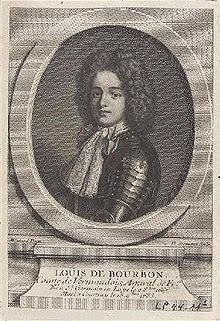

Picture: The handsome Louis de Bourbon, Comte de Vermandois.

In another horrendous, politically more sensitive, story, Philippe and Lorraine, “deflowered” Louis de Bourbon, Comte de Vermandois, the illegitimate son of the king himself! The young Vermandois was put into the care of Philippe’s wife when his mother fell out of favor with the king and retired to a monastery. From engravings of him one can see that he was a very handsome young man. Needless to say this did not escape the eyes of Philippe. He soon came under the influence of his uncle and at the very young age of around 15 he was “deflowered” by his uncle and his entourage! It turned out to be a terrible mistake by the under-aged Vermandois. His father, the king was disgusted, and he was banned from court. Finally he was shipped off to fight in the French-Dutch war and died on the front at the very young age of only 16 years.

In Philippe de Lorraine, Minette had met her match. Her relationship with Lorraine was openly hostile. She did all in her power to undermine him. She convinced the king to imprison Lorraine on the grounds (probably true) that he had boasted that he could convince Philippe to divorce her. He finally went in to exile in Rome. This was oil on the fire and Philippe dragged his wife from court and forced her to reside in one of his country estates. Then Philippe finally nagged and convinced the king to allow Lorraine back in France. Soon afterwards under very mysterious circumstances the 26 year old Minette died. She apparently collapsed on the terrace and when she was taken inside cried out that she was poisoned. The official autopsy declared that Minette died of a perforated ulcer and traumatised abdomen – says it all does it not!

Liselotte

Louis XIV himself occupied himself to find a replacement for Minette as quick as possible. A quick search was done of the available candidates and just over one year after the death of Minette, Philippe was remarried with a German princess, Elizabeth Charlotte of the Palatinate, familiarly called Liselotte.

She did not have the beauty of Minette and apparently Philippe on seeing her remarked "how will I ever be able to sleep with her?" Well, it all turned out just fine. She was well respected at court and her German directness was strangely appreciated. She bore Philippe a string of kids and also lovingly looked after the favorite daughter of Philippe from his first marriage. She performed her maternal duties and bore Philippe 3 children, one son and two daughters, that would continue the line of Orleans and make the House of Orleans at least equally as important as the House of Bourbon. She wrote over 50,000 letters during the run of her life to her aunt and family in Germany that proved to be invaluable information about the goings on at the Sun King’s court! Obviously a lot that we know about Philippe came via these letters. She, however, meticulously burnt all the letters that Philippe himself had written during his life to his lovers and acquaintances. And last but not least, unlike Minette, she somehow tolerated the promiscuous gay ways of Philippe and his crowd of gay friends that hung around the palace all the time.

In spite of the blatantly promiscuous husband, she was rather prudish. For example, she was disgusted when her only son was married off to the legitimized daughter of the mistress of the king, Madame de Montespan. This was a compromise that had been reached between the king and Philippe to cover up the scandalous affair with the under-aged Vermandois previously mentioned. Once again, however, all would finally turn out well, as her son became the regent for the under aged Louis XV and her grand daughter would be none less than the mother of Louis XV.

After the death of Philippe she wrote rather poignantly: "I won Philippe over during the last three years of his life. We even managed to laugh together about his weaknesses. He had confidence in me and always took my side, but before that I used to suffer dreadfully. I was just beginning to be happy when the almighty took poor Philippe from me"

Last days

Philippe lived to the ripe old age of that time of 60 and died in his bed of a stroke, one year before the death of his lifelong companion the Chevalier of Lorraine.

So what could possibly be the legacy of Philippe of France, Duke de Orleans, to our world? As with most gays, Philippe was the ultimate patron of the arts. He housed and supported the theatrical troop of Moliere. In actual fact it was Philippe that introduced the great writer and playwright to the Sun King’s court. He loved music and was a avid patron of Lully, who was by the way also gay. He started a fantastic collection.

Furthermore, like Ludwig, he was great fan of architecture. He turned a hunting estate, in the outskirts of Paris, called Château de Saint-Cloud, into a magnificent palace. Unfortunately during the Franco Prussian wars the palace was bombed and completely burn down. Many of the rooms in the Palais Royal were also renovated by him.

Most enduring for his relatives (and the House or Orleans), was the fact that he was a great investor and financier. In those days a great financier meant something like a great collector of titles. As the second son of the realm he had rights to taxes from the provinces of Anjou. When his uncle, Gaston Duc d’Orelans, died in 1660 without an heir the Duchy of Orleans reverted to Philippe. This was one of the richest duchies of France and included such fertile areas as Chartres. Finally when the only daughter of his uncle died, she also left all her wealth and estates to Philippe. As far as we can see Philippe was at least good in making sure that his estates were well managed and develop. For example, he took a keen interest in the building of canals to encourage trade in his domains.

To me the most endearing legacy would be the obviously, or some would say inevitable, gay lifestyle that he chose to live. He made no secret about the fact that he was gay. Even more so, he had no qualms about the fact he was gay. He was no brooding character like Ludwig and he died peacefully in bed surrounded by this family and not childless in some cold lake. He was quite willing to marry and fulfill his marital duties and, perhaps even more impressive, his military duties. And he had his promiscuous fun, to the point that it borders on smut!

He was a personification of the dandy, the metro sexual male of ages to come. There was no need to be mucho to be accepted and successful. There was no need to fit the cookie cutter male role model to become a successful and endearing part of society! He fitted perfectly into an age of sexual tolerance at least within the aristocracy, where fine manner, food, clothing, and culture were the ultimate achievements in life!

zondag 14 november 2010

Ludwig II


The first character in my series on gay icons is the eccentric Ludwig II (10 March 1864 – 13 June 1886), King of Bavaria in the second half of the 19th century. He was the example par excellence of the spoilt gay rich kid. He had magnificent palaces built for himself, lavished his favorites with presents, travelled extensively, built special theatres and opera houses and arranged numerous private opera and theatre production for his sole private enjoyment. It is said that he complained that he could not enjoy the performances to their fullest when everyone stared at him and when he needed to keep his pose in public. Fully understood, who would want to see their king in tears about some swan knight!

Early history

As so many gays in this world it seems that he had an over-compensating mother and an absent father. His mother was the doting and on all accounts loving Marie of Prussia. The poor women fostered two children, the one mad and the other gay. Ludwig’s younger brother, Otto, lapsed into complete dementia as he grew older. There are letters from Ludwig to his mother expressing grave concerns about Otto’s mental health. Ludwig writes that Otto refused to take off his shoes for weeks on end and was scared of walking in the woods for getting blisters. The story is told of the desperate, by then rather aged queen mother spending a dark Christmas in one of the elaborate Bavarian castles with her obviously mad son on the one hand and her clearly recluse eccentric gay son on the other!

Sorry I am getting distracted, we were still at the over compensating mother and the absent father. The anecdote goes that Maximilian II, the father of Ludwig, was advised to from time to time go for walks in the woods with his son. Maximilian apparently retorted asking what would he possibly discussed with this son! Honestly that says it all: How any gays have not heard that phrase at one or other time in their lives?

First adoration


Picture: A young and dashing Ludwig II of Bavaria

In act one an older artistic paterfamilias enters the scene to exercises some undue influence over our gay icon. The paterfamilias in the case of Ludwig was the famous, and to some infamous, composer Richard Wagner.

There is no doubt in my mind that Wagner was an opportunist. He got thrown out of Germany for his leftist tendencies – it was the time of the first embryonic demands of the middle class for some limited democracy. He fled to Switzerland where he fell in love with his benefactor’s wife, Mathilde Wesendonck. He wrote illicit declarations of love and blatantly romantic songs for her under her husband’s nose. This finally got so unbearable to the benefactor that he threw him out of the garden cottage where he had been staying for free.

This was however, the very moment when Mr. Wagner’s luck turned. The young king Ludwig was heavily impressed with the fairytale, Germanic operas of Wagner. The handsome princes, fairytale back drops and damsels in distress stirred his artistic heart. One can imagine him, and from time to time one of his favorites, in joy and tears over the arrival or departure of a handsome knight (Lohingrin) or a muscled hero (Siegfried). So one of the first things that the young king Ludwig did, was to summon Wagner to court to work nearly exclusively for him. And this is where our gay hero gets a huge amount of sympathy: He saved one of the greatest opera composers of all times for us and gave him the necessary means to produce some of the greatest opera pieces ever written. One of my personal Wagnerian favorites, Tristan and Isolde, is completed shortly after Wagner arrived at the court in Bavaria. This would only be the start and Ludwig would support Wagner in finishing numerous other operas such as the celebrated Ring der Nibelungen triptych of operas. At the end of Wagner’s life Ludwig would come through with the required finances to complete a state of the art opera house just for Wagner in Bayreuth.

In true Wagnerian fashion the old master would, however, test the limits of his benefactor’s friendship. He, Wagner, got involved in one of the juiciest scandals of the Bavarian court of that time. He fell in love with the beautiful, 24 years younger, but unfortunately married Cosima van Bulow. She was the illegitimate daughter of the composer Liszt who tried all his means to stop her from pursuing her relationship with Wagner. Well, you can imagine the indignation at court! When Wagner tried to influence the king to change some of the members of his cabinet the glass was full! The king was put under huge pressure and Wagner was once again ordered to leave Germany.

Ludwig, however, was a true and loyal friend. He installed Wagner in a grand palace on the shore of Lake Lucern. He continued to support Wagner financially and after the storm died down even managed to install him in a very opulent mansion in Bayreuth close to his very own opera house! So much for exile and hardship!

It seems clear that there were never any sexual relationship between Wagner and Ludwig. Wagner was clearly much too busy with his Cosima to have any sexual feelings for Ludwig. Ludwig probably saw in Wagner a supreme artist, but supposedly also a understanding father figure. Finally he had found someone that could go the extra mile with him in his fantastic ideas. Here was the man that shared the same dreams as he had – a man that had the same ideals as he had. Here was a man that had no need for diplomatic conniving and strategic wars, but found art the greatest good like him.

First love

Ludwig’s first love seemed to have been the athletic, blond, aristocratic Paul of Turn and Taxis. Paul came from one of the richest aristocratic families of Germany. He met Ludwig at court and it was love at first site. Ludwig’s nickname for Paul was his faithful Frederich.


Picture: Paul von Turn und Taxis, 24 Jan 1964

This is Ludwig to Paul: “Let me assure you that I shall always foster with the same sincerity the feelings of gratefulness and faithful love which I bear for you in my heart. Remember with love, your faithful Ludwig”

And this is Paul to Ludwig: “Dear and beloved Ludwig! I have just finishing my diary with the thought of the beautiful hours which we spent together that evening a week ago which made me the happiest man on earth… Oh, Ludwig, Ludwig, I am devoted to you! I couldn’t stand the people around me; I sat still and, in my thought I was with you...How my heart beat when, as I passed the Residenz, I saw a light in your window."

After spending some time together in the Bavarian Alps, Paul was promoted to be the private aide-de-camp of Ludwig. I suppose that was as close to being alone with a man that Ludwig could get and one can only imagine what those “beautiful hours which we spent together a week ago” could mean.

Paul shared Ludwig’s passion for music and moreover Wagner. Paul had a beautiful voice and once sang some arias of Lohingrin in an elaborate private performance for Ludwig. There is an engraving showing Paul as a magnificent knight in shining amour, riding in on his swan boat. These images of pure pleasure and love must have stayed with Ludwig all his life and one can imagine him on a lonely night in his beautiful Neuschwanstein (meaning New Swan Stone) castle thinking back on those beautiful memories. When Wagner was finally banned from court, Paul played a critical role in convincing Ludwig to stay on and not abdicate and act as a discreet interlocutor.

Soon, however, also the relationship between Paul and Ludwig soured. Some commentators maintain that rumors reached Ludwig that he was two timing him with some women, or rather one specific woman. I am sure jealous tongues attempted to discredit Paul. Also Ludwig must have been torn in two with his inner conflicts. One can imagine “that the slightest tremor of reality threatened to send the relationship plummeting to oblivion” as one commentator writes. Paul could easily falter making a wrong choice, saying the wrong word, displaying too much familiarity on one occasion and not enough affection on another. Trivial in themselves, such incidents preyed upon Ludwig’s mind until they became unbearable. Once and for all, he cut Paul out of his life. When he learned of his fall from grace, he sent some agonized letters to the King, but there was to be no response from Ludwig:

“My own beloved Ludwig! What in the name of all the saints has your Friedrich done to you? What did he say that no hand, no good night, no “Auf Wiedersehen” favored him? How I feel I cannot say, my trembling hand may show you my inner disquiet. I did not intend to hurt you. Forgive me; be good again with me, I fear the worst - I cannot stand this. May my notes climb to your reconciliation. Amen! Forgive your unhappy Friedrich”.

The rest of Paul’s life is a true tragedy. He started to drink heavily and one drunken night ended up in bed with an operetta star, Elise Kreuzer. She maintained that he had made her pregnant, that while he was apparently completely inebriated. He deserted the Bavarian military and was forced to marry Elise by his family that proceeded to strip him of all his titles and money by the family. He tried to take up acting but was hissed of the stage. As if all of this was not bad enough, he contracted tuberculosis and Elise eloped with a Prussian officer. He died shortly afterwards in Cannes, "remembering the only true love of his life" as he wrote shortly before his death. He never saw Ludwig again, in spite of numerous attempts to reconcile them by his step family and the Wagners. Sadder than that you don’t often get!

Marriage crisis

As with most gays, at some point in time Ludwig would be confronted with the frightening prospect of marriage. As is so often the case, the central tragic figure in this episode was a very lovely, but - oh so - embarrassed lady. The lady in case was the rather dashing Princess Sophie of Bavaria, the cousin of Ludwig. Her sister was the famous Empress Elizabeth of Austria that became engraved in popular culture as “Sissy”. In January 1867 Ludwig was betrothed to Sophie and a date was set in August for the wedding.

They three of them, Sissy, Sophie and Ludwig, were childhood friends. Actually one could describe Sissy and Sophie as two very good examples of early “fag hags”. They adore Ludwig and his mad fantasies. Sissy called Ludwig her “eagle” and Sissy was his “dove”. Later after the horrible ordeal was over Ludwig would write to Sophie, calling her "My beloved Elsa! Your cruel father has torn us apart. Eternally yours, Heinrich" (the names Elsa and Heinrich came from characters from Wagner operas).

Well, Ludwig tried to postpone the wedding date twice and finally called it off. Sophie, Sissy and the whole family was totally disgusted and disgraced. The whole ordeal must have contributed in no small part to the increasingly recluse behavior of Ludwig.

Some commentators maintained that Sophie was already having an affair shortly after the engagement was announced. I can imagine that she must have realized that it was not going to be a hot marriage in any way or mean! And perhaps even more intriguing some commentators think that Ludwig fell head of over heals in love around the time of the engagement with a second Richard.

The second Richard

Three months before the planned wedding to Princess Sophie, Ludwig met Richard Hornig, a groom at the stables at Berg castle. A blond, blue-eyed Prussian, five years older than the King, he was to become an important figure in Ludwig’s life. Richard Hornig was a superb horseman and mutual love of horses can be a strong bond. Hornig saw the King constantly and intimately, and their friendship seems to have been sincere and lasting. He saw to the comfort and well-being of his Sovereign. He soon occupied the office of Crown Esquerry and Master of the Horse. He controlled all horse transport, coaches and carriages, stabling, purchase, breeding and training of the Royal horses, which numbered around 500. The King and Hornig often visited the remote castles, chalets and mountain huts, mostly in a four-horse carriage and sometimes in an illuminated sleigh in the moonlight. Hornig soon acted as go-between the King and his ministers which caused much criticism. The King and Hornig also set out on a journey through Germany and to France, with the King travelling incognito as Count von Berg. Some commentators have little doubt that the appearance of Richard Hornig in May led to the break with Sophie. Perhaps it convinced Ludwig that for him a normal love for any woman was not possible.

German unification

Ludwig lived in troubled times. He was caught between three European empires. There was the waning Austrian-Hungarian Empire to his south and the French Empire to the west. The new kid on the black was the ambitious Prussian Empire to the north with the brilliant strategist and diplomat, Otto von Bismarck. In two sets of separate wars, Bismarck managed to unite the German nations under the leadership of the Prussian king. First he provoked the Austrian, with which side Bavaria sided, to a war and defeated them in a devastating blitzkrieg. Then he provoked the French and, this time with the Bavarian on his side, routed the French. As the German troops approach Paris it quickly became clear that the true intention was to install the Prussian king as Kaiser of the united German people.

Reluctantly, Ludwig agreed to the deal. As a sign of his discontent, he sent his brother Otto to sign the peace treaty in Versailles. One can imagine that with a new Kaiser in place, Ludwig gradually must have felt somehow relieved to leave the ugly politic up to Berlin and retire in his own world of castles, music and Louis XIV fantasies.

In his private life there became increasingly marked the signs of moral and mental weakness which gradually gained the mastery over his once pure and noble nature. A prominent feature was his blind craving for solitude. He cut himself off from society, and avoided all intercourse with his family, even with his devotedly affectionate mother. With his ministers he came to communicate in writing only. At the end he was surrounded only by inferior favorites and servants. His life was now spent almost entirely in his castles far from the capital, which irked him more and more, or on short and hasty journeys, in which he always travelled incognito. Even the theatre he could now only enjoy alone. He arranged private performances in his castles or in Munich at fabulous cost, and appointed an official poet to his household. Later his avoidance of society developed into a dread of it, accompanied by a fear of assassination and delusions that he was being followed.

The grand finale

The last part of Ludwig’s story is somewhere between a mental asylum and a murder mystery. Through the ages, eccentricity has regularly been incorrectly misconstrued as madness. Ludwig was no exception. His grand projects not only created work in the Bavarian countryside, it slowly but surely depleted his own coffers and that of the Bavarian state. And most frightening of all his plans seemed to have no end: Three huge fairytale castle building projects would normally satisfy the average despot, but not Ludwig. He had at least 2 further huge building projects on the drawing board.

His ministers connived with the state physician and developed a plausible story about his insanity and megalomania. Reluctantly they convinced Berlin to go along with their plans and Ludwig was basically incarcerated in one of his palaces. One stormy might he went for a walk with one of his close aides and rocked up the next morning floating in the waters of the adjacent lake. There are numerous theses about whether he was finally killed by the Bavarian conspirators or whether he tried to escape and drowned. Honestly, the true reason for his death looks of lesser importance, to the tragic finale of a rather deranged and deprived man!

Legacy

So where does that leave us today, 124 years, after his death? The facts are that his castles are a major tourist destination that probably earned their costs back fully. He played no small role in securing the famous operas of Wagner for prosperity. The fans of Wagner need to light a candle to him every year they visit the exclusive Wagner Festspiele in the beautiful opera house financed by Ludwig.


But to me Ludwig also has a private much more intimate legacy. He became a symbol of peace in a sea of turbulence. He believed that there were much better things to do than fight wars and kill innocent disenfranchised people. In his deranged way he found a much more exiting realty than the macho culture of his time. In true gay fashion, he showed the world an artistic alternative that is much more enduring than that of the militaristic culture of his age. Where can you find Bismarck today? Was the ultimate military legacy of Bismarck not the devastating First World War? Is the legacy of Bismarck the bombed and burnt down cities of Germany as opposed to the magical castles of Ludwig? Is the legacy of our mad hatter gay icon, Ludwig, not so much more appealing if one looks at it in this way?!